What we know about screens and language in the early years
Screens are part of modern life, but excessive use can displace the rich interactions that build language. Understanding the impact of media helps families make informed choices.
Research findings
Recent studies suggest that high screen exposure in infancy and toddlerhood is associated with delayed language development and reduced parent–child interaction[10][11]. When the television is on in the background, parents speak less and babies vocalise less compared with when the TV is off. Interactive video calls may have some benefits if adults co‑view and discuss the content, but passive viewing alone does little to develop language. The Canadian Paediatric Society recommends avoiding screen time (except video chat) for children under two and limiting routine screen time to about an hour per day for ages two to five[10]. Less is better, and young children learn best from face‑to‑face interactions and play[11].
Co‑viewing and conversation
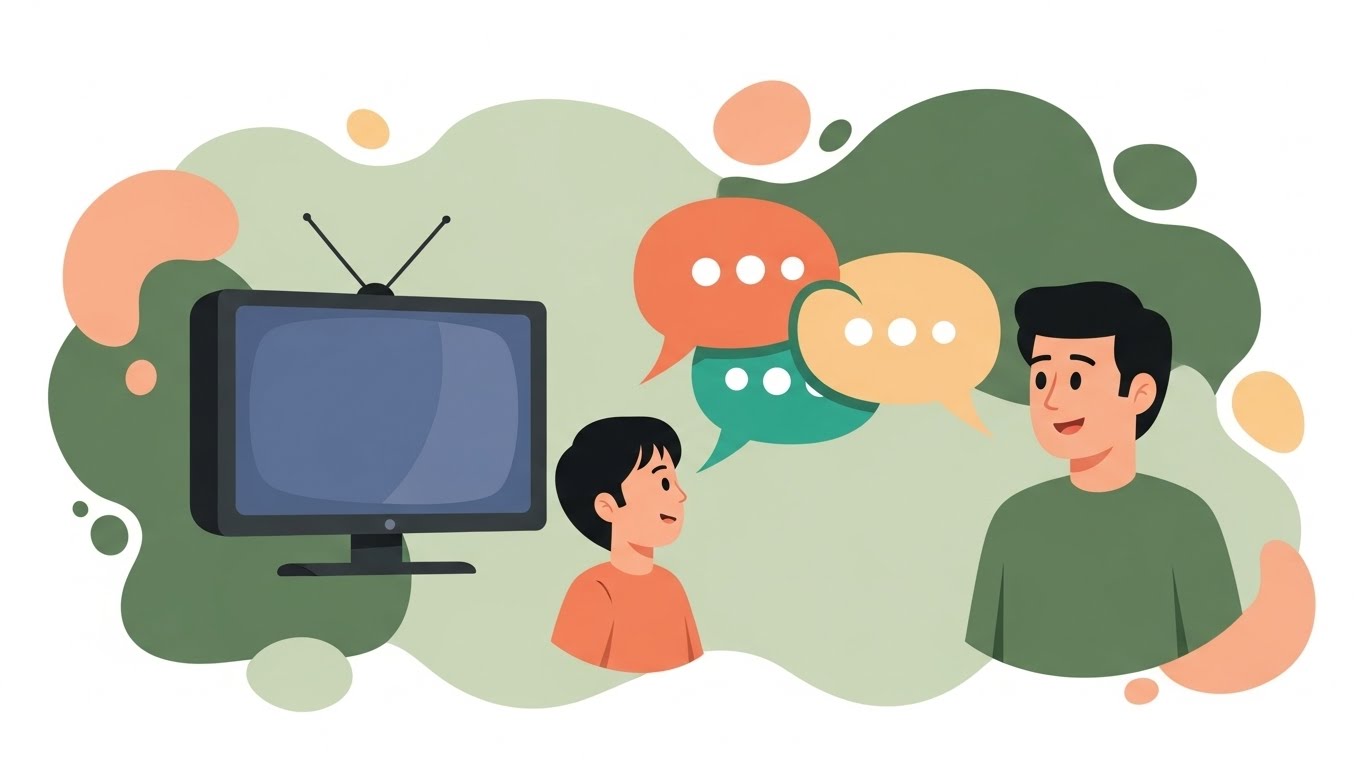
When you do use screens, watch together and talk about what you see. Pause the program to ask questions (“Why do you think the character is sad?”) and relate it to your child’s experience (“We saw a dog like that at the park”). Choose high‑quality content that moves at a gentle pace, uses rich vocabulary and encourages problem solving. Turn off autoplay and set a timer to help end the session without tears. Avoid background TV during meals and playtime; it distracts both adults and children.
Balancing media with offline activities
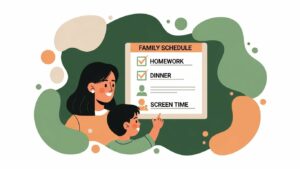
Replace some screen time with interactive play, reading and outdoor exploration. Show children how to use technology as a tool—video chat to connect with distant relatives, look up a recipe, draw a picture. Model balanced media use by putting away your own phone during family time. Plan screen‑free zones (kitchens, bedrooms) and times (meals, an hour before bed) to protect conversation and sleep. This approach aligns with research linking screen time to fewer conversational turns and poor sleep routines, and with AAP guidance to turn screens off at least an hour before bedtime[12][6].
At NINI, we prioritise face‑to‑face interactions and limit screen use. We share ideas with families for creating media rhythms that support learning and connection. To learn more, book a tour or join our interest list.
References: Canadian Paediatric Society – Screen use and young children[10][11][6]; AAP HealthyChildren – Media and children (5 C’s); JAMA Pediatrics cohort studies linking screen time to language delays; University of Bath press release on screen‑free bedtimes improving toddler sleep[12].

Shared reading works: what studies show