
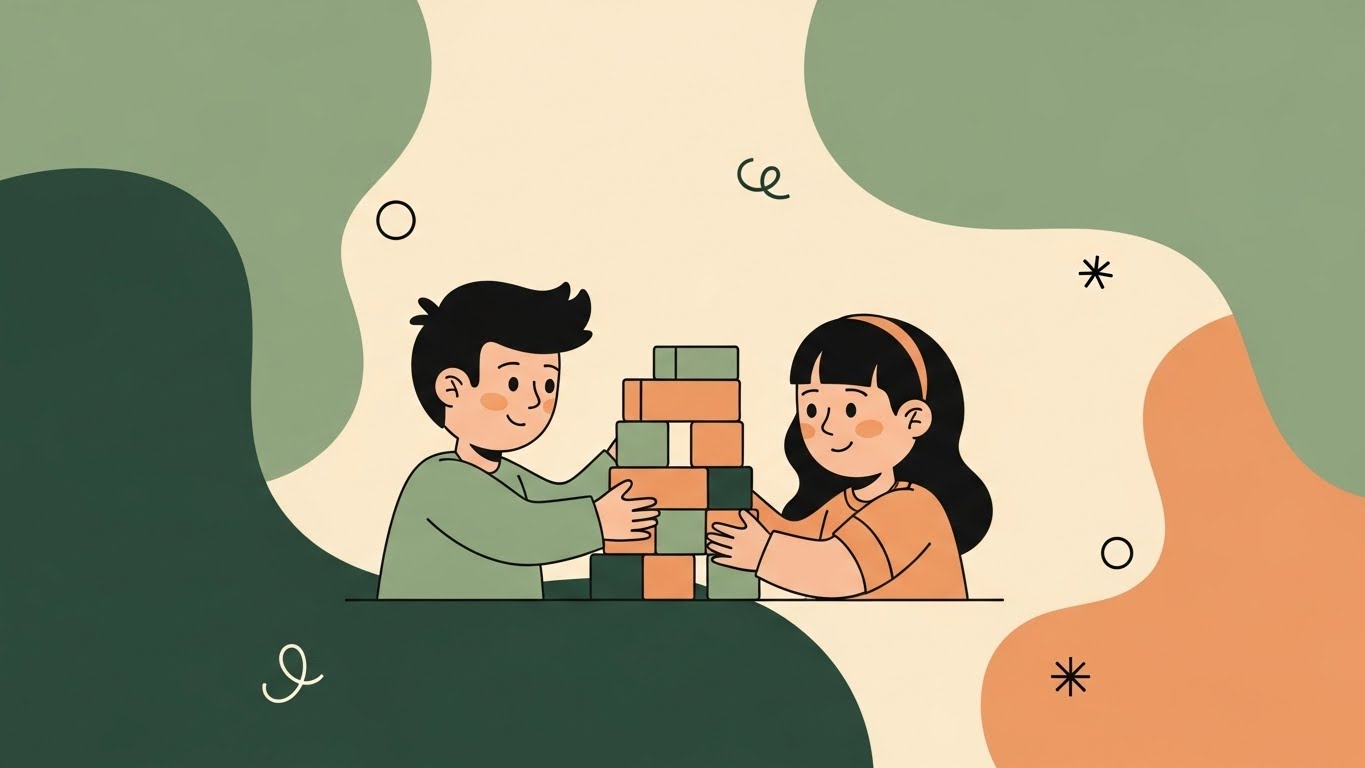
Sharing, turn-taking and social skills
Preschoolers are just beginning to understand that other people have feelings and needs. Sharing and turn‑taking are complex skills that take years to master. With patient coaching, children learn cooperation, empathy and fairness.
Why sharing is hard
Between two and three years old, children are developing a sense of ownership. They may cling to favourite toys because possessions represent security. Short spurts of turn‑taking often happen when adults model and support the exchange. By ages four and five, many children start to negotiate and even swap toys willingly. Forcing a child to share can backfire; focus on teaching the language of turn‑taking, such as “When you’re finished, can I have a turn?”
Games and small jobs that teach cooperation
Structured games help children practise waiting and following rules. Simple board games, card matching, rolling a ball back and forth or playing “Simon Says” require listening, patience and respect for peers. Cooperative tasks give children shared goals: carrying a basket together, building a tower, preparing a snack or cleaning up toys. Encourage them to talk about their plan (“How can we build a taller tower together?”). When disagreements arise, help children verbalise their needs and brainstorm solutions.
Modelling empathy and problem‑solving
Demonstrate empathy by narrating feelings: “Elliott is sad because the truck is gone; can you offer a different toy?” Read books about friendship and discuss characters’ emotions. Role‑play scenarios with dolls or puppets. Praise specific pro‑social behaviours (“You gave Mila a turn with the blue crayon, that was thoughtful”). Encourage children to notice positive actions in others: “Look, Lucas helped pick up the blocks!”
Helping at home and school
Create house rules about taking turns and caring for shared resources. Use timers or sand glasses to mark turns. Provide multiples of popular items when possible to reduce conflict, but also teach that waiting is part of life. Encourage children to contribute to family tasks: setting the table, folding napkins, watering plants. At school, teachers can organise small group projects where each child has a role; this fosters cooperation and respect.
References: ZERO TO THREE – Helping young children learn to share; AAP HealthyChildren – Social development in preschoolers; Canadian Paediatric Society – Positive discipline strategies[3].
Emotion coaching and warm limits