
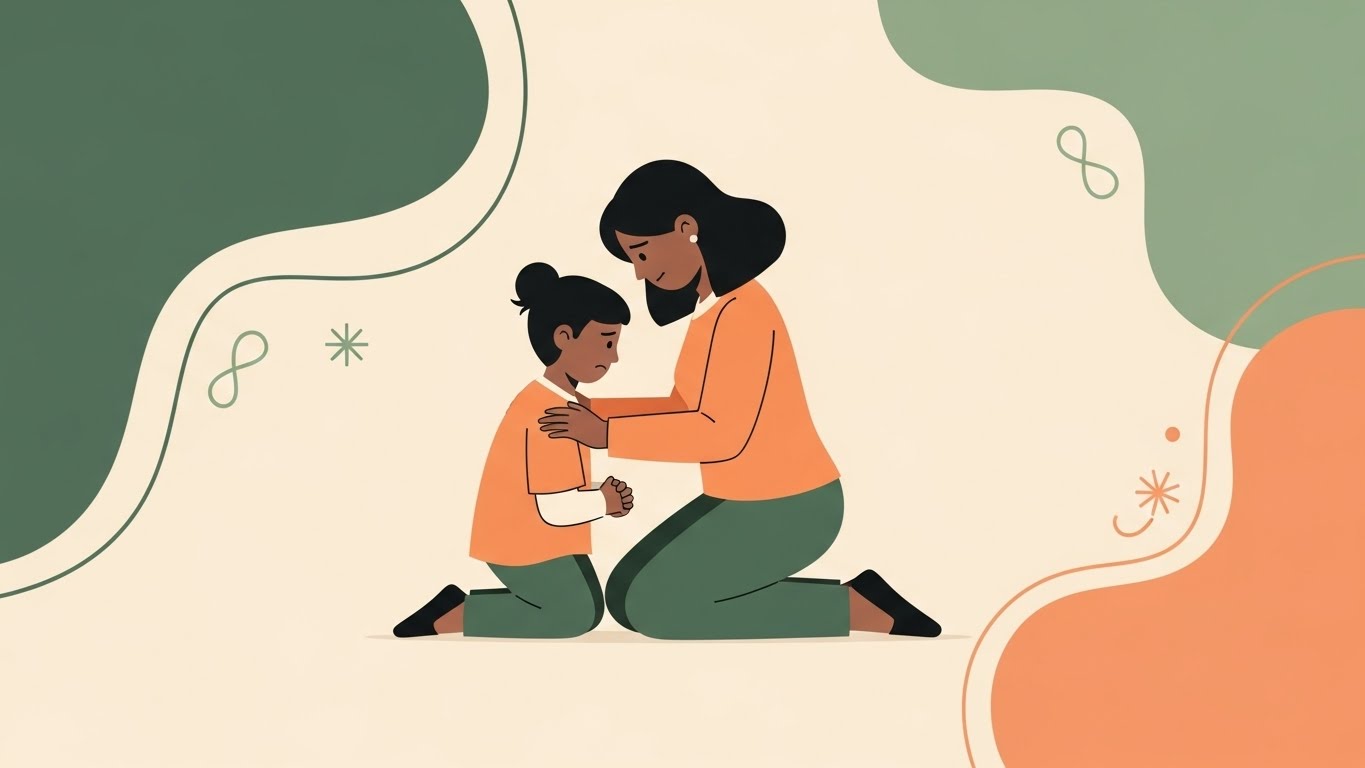
Emotion coaching and warm limits
All children experience strong emotions. They need adults who can set loving boundaries and teach them how to handle frustration, sadness and excitement. Emotion coaching combines empathy with guidance and helps children develop self‑control and resilience.
Understanding big feelings
Young children often act out because they lack the words or skills to express themselves. Brain development means impulse control and emotional regulation mature over time. When toddlers bite or preschoolers throw a toy, it isn’t defiance; it’s overwhelm. Acknowledge feelings (“You look angry because your block tower fell”) and name them. This teaches children to recognise emotions in themselves and others.
Positive discipline strategies
The American Academy of Pediatrics offers ten healthy discipline strategies that keep children safe while promoting learning. These include modelling the behaviour you expect; setting clear limits in language children understand; explaining natural consequences calmly and following through consistently; listening to your child’s perspective; giving them your attention and catching them being good; planning ahead for challenging situations; redirecting bored or curious children to acceptable activities; and using brief, non‑punitive time‑outs only when a specific rule is broken. The AAP emphasises that spanking and harsh words are not effective and can harm long‑term brain development.
Using choice language and positive attention
Children cooperate better when they feel connected. Phrase directions positively (“Feet stay on the floor” instead of “Don’t climb”). Offer two acceptable choices (“You may hold my hand or ride in the stroller”). Praise specific behaviours (“You waited your turn—that was thoughtful”) and describe what you see (“You put away all the crayons”). When a child is overwhelmed, take a pause for guidance—step aside, breathe together and think of a solution.
Natural consequences versus punishment
Natural or logical consequences help children link actions to outcomes. If a child throws a toy, that toy is put away until they are ready to play gently. If they refuse to wear a coat, they experience being cold and can choose to put it on next time. Punishment may stop behaviour temporarily but does not teach problem‑solving; research shows children learn better when adults model the behaviour they expect and guide them to make amends.
Teaching self‑regulation skills
Emotion coaching involves helping children notice body cues (clenched fists, fast breathing), identify feelings and choose tools to feel better. Practise deep breaths, humming a song, squeezing a ball or cuddling a stuffed animal. Teach children to use phrases like “I’m frustrated, I need help.” Over time, they will internalise these strategies and rely less on adult intervention.
References: American Academy of Pediatrics – Healthy discipline strategies; AAP policy statement on effective discipline; Canadian Paediatric Society – Positive discipline for young children (Caring for Kids)[3].

Calm routines at home and school