
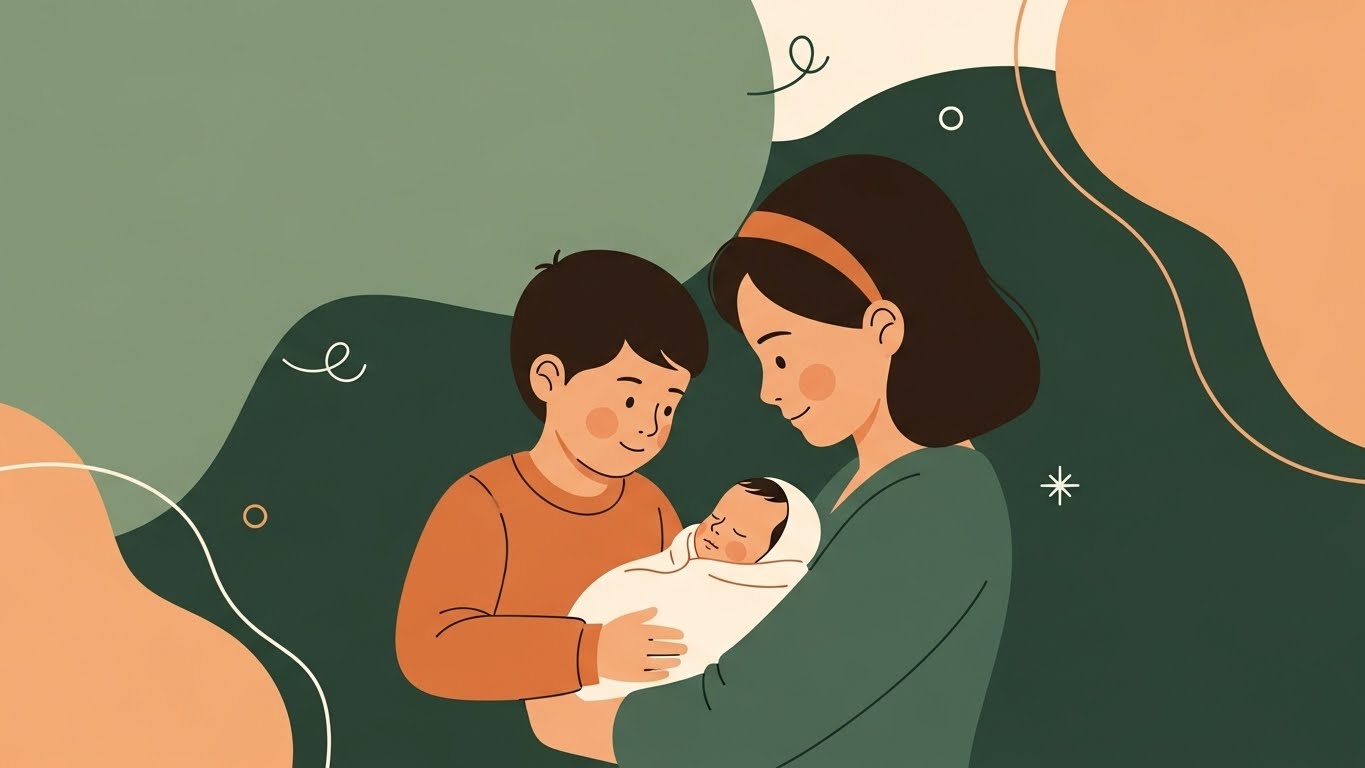
Welcoming a new baby: helping your child feel connected
The arrival of a new sibling brings joy and adjustment. Older children may feel excited, jealous or worried about their place in the family. Preparing in advance and maintaining meaningful rituals can ease the transition and help siblings feel valued and secure.
Preparing before baby arrives
Talk about the pregnancy in simple, positive terms. Look at your child’s baby photos and share stories about when they were born. Read age‑appropriate books about becoming a sibling. Visit friends with babies so your child knows what to expect. If changes to sleeping arrangements are necessary, such as moving from a crib to a bed, make them well before the baby arrives so your child doesn’t feel displaced. Let your child help pick out a toy or decoration for the baby. Explain that babies sleep and cry a lot, and that you will need their help.
Anticipating feelings and behaviours
It’s normal for older children to regress temporarily (asking to be carried, bedwetting) or display anger. Validate feelings: “It’s hard to share mom and dad.” Give your child words to express jealousy or frustration. Watch for behavioural signs of stress (big emotions, clinginess) and respond with extra patience. Explain that babies take a lot of time but that love grows when a family grows.
Maintaining connection and routines
Protect one‑on‑one time with your older child. Even ten minutes of focused play, reading or talking each day reassures them of your love. Keep anchor routines like bedtime stories, bath time or weekend walks. Invite your child to be a helper in ways they enjoy: fetching diapers, singing a lullaby, choosing a book. Praise specific helper behaviours: “You gently rubbed the baby’s back—that was kind.”
Supporting the older child during visits
When visitors come to meet the baby, encourage them to greet and engage with the older child first. Have a special basket of toys or activities for your child to enjoy during feeding times. Give your child a small gift from the baby. Encourage them to share their feelings and ask questions. Ask friends and family to avoid comparisons (“You were such a good baby”) and to emphasise the older child’s new role.
Partners and roles
Discuss with your partner how you will divide caregiving tasks to ensure each child gets attention. If one parent is feeding the baby, the other can spend time with the older child. Include grandparents or friends as part of your support network. Recognise that your own emotional state affects your child; make time for self‑care and ask for help when needed.
References: AAP – Preparing your child for a new sibling (HealthyChildren); NHS – Helping children adjust to a new baby.

Sharing, turn-taking and social skills