
Calm routines at home and school
Young children thrive when their days are predictable. Calm, consistent routines for mornings, meals, play and bedtime help them feel secure and cooperative. When everything has its place, even toddlers can anticipate what happens next.
Why routines matter
Consistent sequences of events give children a sense of security. Head Start experts compare the way adults start their day—an alarm, coffee, a shower—to a child’s need for a reliable scaffold. Babies learn to trust that their needs will be met through regular caregiving routines. Mirroring home routines in child‑care settings helps infants and toddlers settle in because familiar patterns signal safety.
How calm routines help
Daily rhythms lower anxiety by making the world more predictable. Toddlers and preschoolers can mentally prepare for what comes next. A predictable flow supports self‑regulation: children know that teeth brushing leads to stories, so they can shift gears without protest. Simple warnings like “two more minutes of play and then shoes” give them time to adjust. Positive parenting guidance from the Centers for Disease Control and Prevention emphasises that clear routines and consistent cues build cooperation and independence[1].
What to try at home
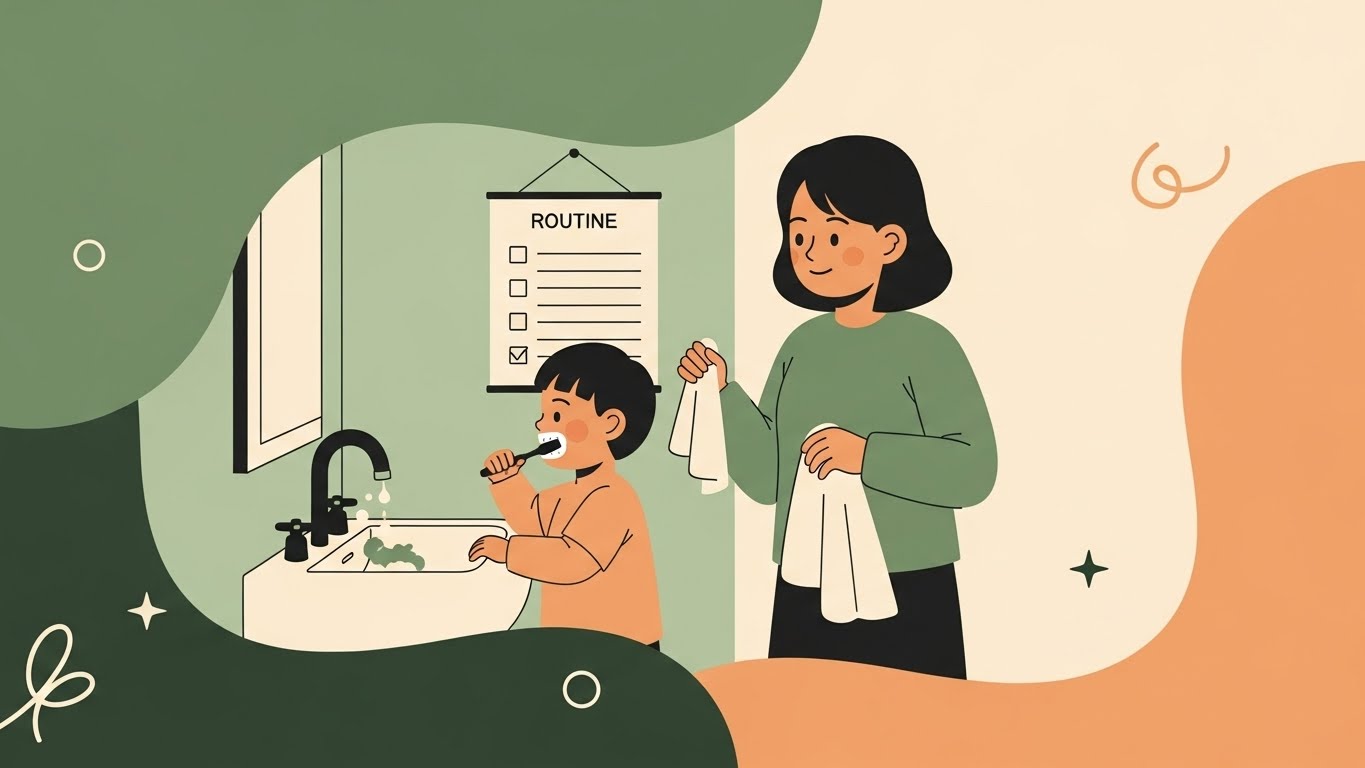
Identify the key transitions in your day—waking up, meals, leaving the house, napping, bedtime. For each, create a short sequence of steps. A bedtime routine might include brushing teeth, using the bathroom, choosing two stories, snuggling together and lights out. Keep the sequence in the same order each night so your child can internalise it. Use visual aids such as drawings or photos for toddlers who cannot read; visuals help them follow the flow. Offer limited choices to build autonomy (“blue pyjamas or green ones?”). Preview transitions with gentle reminders (“After this song, we’ll clean up for lunch”) and allow time for your child to finish an activity. Remain calm yourself—children pick up on your tone.
Adapting routines across settings
Life isn’t always predictable. Holidays, illnesses and visitors can disrupt the usual flow. A flexible routine retains the order of events even when the timing shifts. If you come home late, still brush teeth and read a shorter story before bed. Review routines regularly: a toddler may need more assistance with dressing, while a five‑year‑old can choose clothes and pack a backpack. Share home routines with caregivers or teachers so they can mirror familiar rituals at school; Head Start emphasises that children feel most secure when routines at school echo those at home.
Balancing consistency and flexibility
The goal is not a rigid schedule but a rhythm that works for your family. Consistent cues help children anticipate, while flexibility accommodates growth and special circumstances. Explain changes (“Grandma is visiting, so bedtime will be later”) and keep anchor rituals like bedtime songs or morning hugs even when other details vary. Over time, these shared moments become the anchors of your child’s day.
At NINI Early Learning we model simple visual schedules and caring language to help children move smoothly between activities. If you’d like to see our routines in action, book a tour or join our interest list.
References: Centers for Disease Control and Prevention (CDC) – Positive Parenting Tips (Infants, Toddlers and Preschoolers)[1]; Head Start Early Childhood Learning & Knowledge Center – Let’s Talk About Routines transcript; Mass.gov – Creating routines for bath time, bedtime and meals emphasising security and calm[2].