
Move, sit and sleep: what the 24-hour guidelines say
Young children need a balance of physical activity, sedentary time, sleep and gentle screen use across a 24‑hour day. Canada’s and the World Health Organization’s integrated guidelines provide clear recommendations.
What the day can look like
Infants under one year: no sedentary screen time; aim for 14–17 hours of sleep (0–3 months) or 12–16 hours (4–11 months) including naps[5]. Provide at least 30 minutes of tummy time spread throughout the day and avoid restraining infants in car seats or strollers for more than an hour at a time. For toddlers aged 1–2 years: limit sedentary screen time to no more than one hour per day (less is better) and ensure at least 180 minutes of physical activity. Sleep recommendations for toddlers are 11–14 hours including naps[5]. Preschoolers aged 3–4 years should accumulate 180 minutes of physical activity (including 60 minutes energetic play), sleep 10–13 hours, and have no more than one hour of sedentary screen time[5].
Creating a healthy rhythm
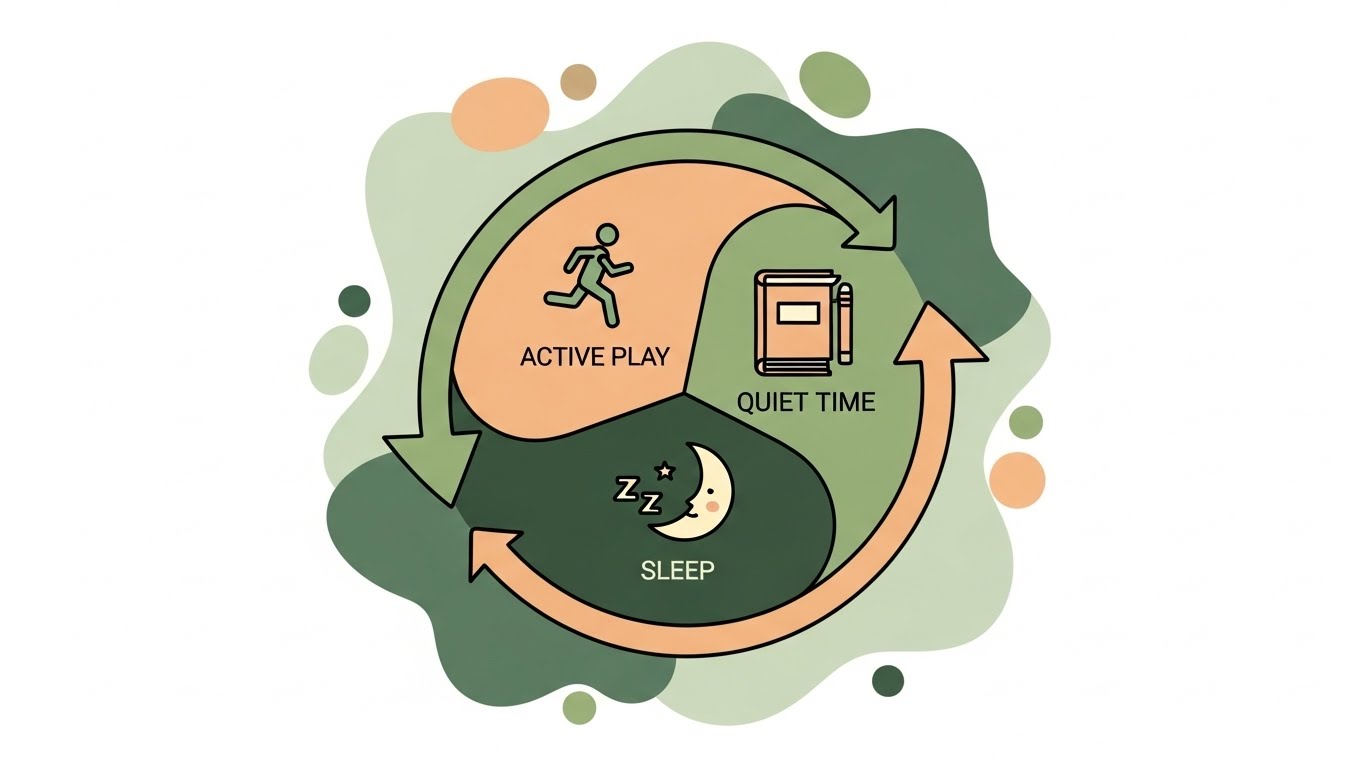
Encourage outdoor play, dancing, climbing and imaginative games to meet physical activity goals. Break up sedentary periods with movement breaks. Provide quiet time for puzzles, stories or drawing to balance busy play and support focus. Naps remain important through age four for many children; watch for signs of readiness to drop naps and adjust bedtime accordingly. Turn off screens during meals and an hour before bedtime to protect sleep and support family connection. Engage children in screen‑free activities like cooking, gardening and art.[6]
Predictable rhythm versus ad hoc plans
Children benefit from a predictable daily rhythm that meets their needs for activity, rest and learning. While every day will vary, having a general flow—active play in the morning, quiet time after lunch, outdoor play in the afternoon and calming activities before bed—helps regulate energy and emotions. Avoid overscheduling; unstructured playtime is essential for creativity and problem solving. When routines are disrupted, gently return to the usual rhythm as soon as possible.
References: World Health Organization – Guidelines on physical activity, sedentary behaviour and sleep for children under five; Canadian 24‑Hour Movement Guidelines for the Early Years[5]; CPS – Screen use and young children[10].

Getting started with peanuts: what the guidelines recommend