
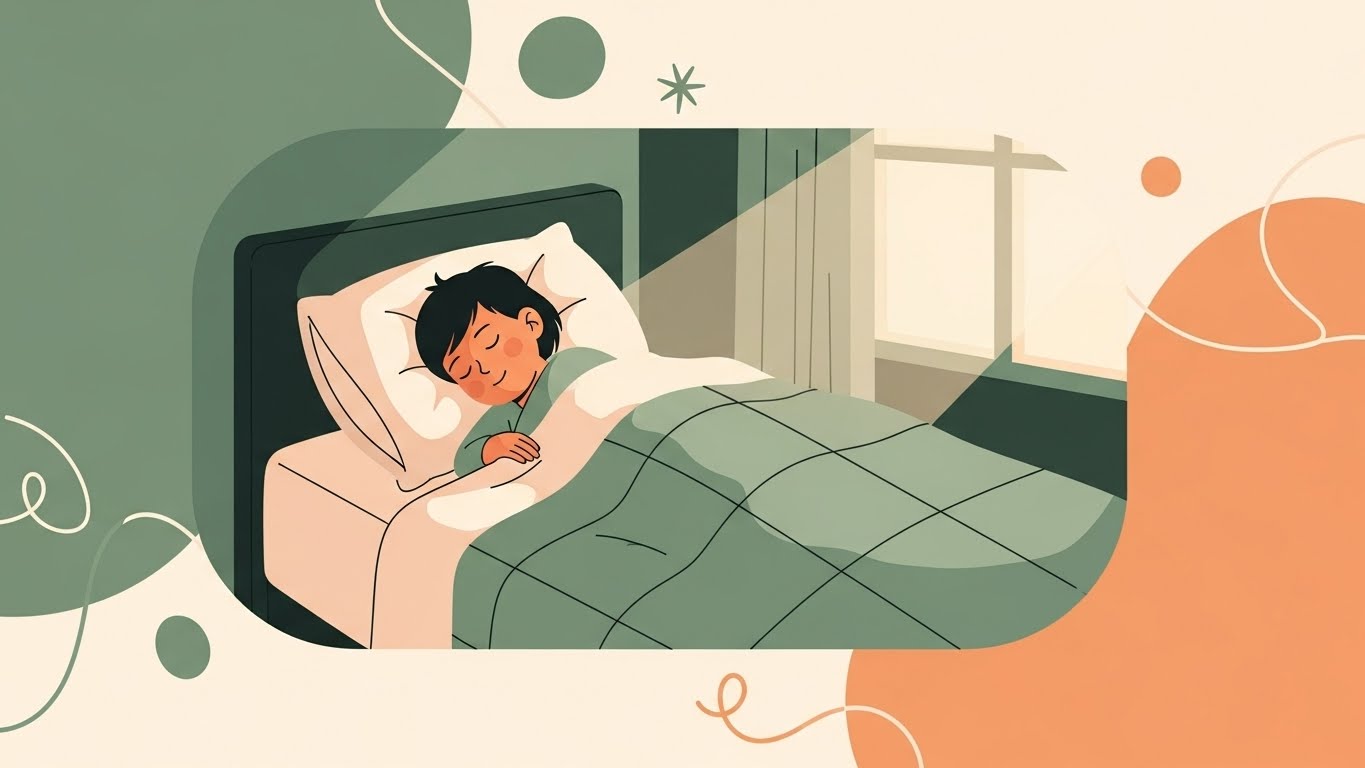
Rest that restores: sleep needs and soothing bedtime rhythms
Adequate sleep supports growth, learning and emotional regulation. Young children need more sleep than adults, and calming bedtime rituals help them settle into restful nights.
Typical sleep ranges
Toddlers (ages 1–2) generally need 11–14 hours of sleep in a 24‑hour period, including naps. Preschoolers (ages 3–5) need about 10–13 hours. Sleep needs vary; watch for signs of adequate rest such as waking up naturally, being alert during the day and maintaining a stable mood. Chronic sleep deprivation can lead to irritability, attention difficulties and health problems. These ranges align with the Canadian 24‑Hour Movement Guidelines[5].
Calming bedtime routines
Begin winding down about 30 minutes before bed. Dim lights, play soft music or sing, read two short stories and give a final hug. Avoid screens for at least an hour before bed; blue light can delay melatonin release and make it harder to fall asleep[6]. Provide a comfortable sleep environment—cool, dark and quiet, with a favourite toy or blanket for comfort. During the day, ensure your child has plenty of physical activity and exposure to natural light to help regulate the body clock.
Managing naps and bedtimes
As children grow, daytime nap patterns change. Long late‑afternoon naps may push bedtime later and reduce night‑time sleep. If your preschooler resists bedtime, try shortening or eliminating late naps and bringing bedtime forward. Follow your child’s cues; some four‑ and five‑year‑olds still benefit from quiet rest time even if they don’t sleep. Maintain consistent wake‑up times, even on weekends, to regulate circadian rhythms.
References: Canadian 24‑Hour Movement Guidelines (Early Years)[5]; CDC – Sleep recommendations for toddlers and preschoolers; CPS – Screen use and young children (avoiding screens before bed)[6].

Two languages, one growing brain: raising children in bilingual homes