
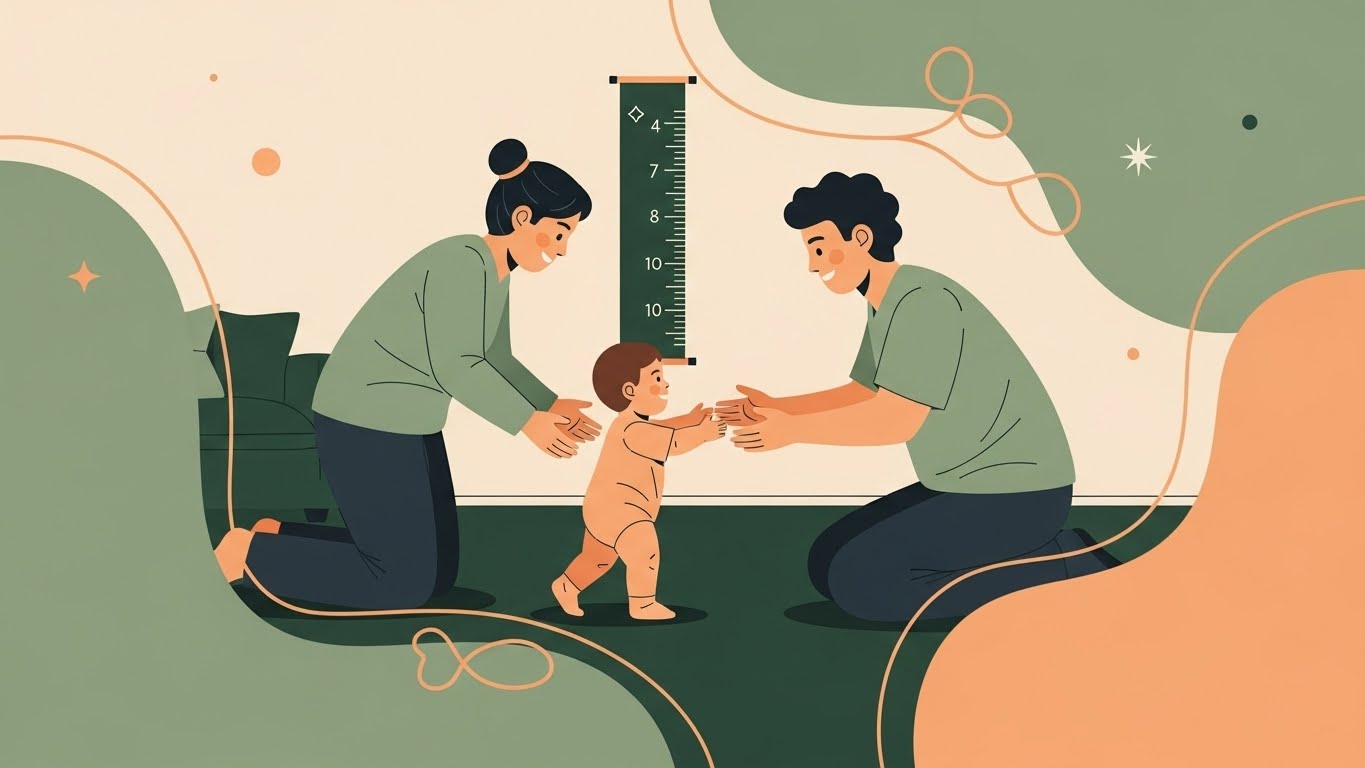
Keep growing, check in: developmental milestones and when to ask for help
Every child grows on their own timeline. Developmental milestones provide guidelines for what most children do by certain ages, but they are not deadlines. Knowing the general ranges helps parents recognise strengths and identify areas where extra support might be needed.
What to watch in everyday moments
In the first year, babies learn to roll over, sit, crawl and respond to their name. By 18 months, most toddlers walk steadily, imitate actions, use a handful of words and show interest in other children. By age three, children can speak in short sentences, climb stairs, stack towers and play pretend games. By age five, they can dress themselves, hop on one foot, draw simple shapes and understand simple rules in games. Social‑emotional skills—like making eye contact, showing empathy and taking turns—develop alongside physical and cognitive abilities[8].
Using milestone checklists and questions
Tools such as the CDC’s “Learn the Signs. Act Early.” checklists can help you track progress in communication, physical, cognitive and social domains. Use these guides to celebrate new skills and note questions for your health‑care provider. Bring up any concerns at regular check‑ups; doctors can help determine whether your child is within the expected range or might benefit from further evaluation. Early intervention services provide support for speech, motor, social or learning delays and are most effective when started promptly.
When to watch more closely
Variation is normal, but certain signs should prompt timely assessment: loss of skills previously acquired; lack of social engagement (no smiling or eye contact by six months); no single words by 16 months; no two‑word phrases by age two; or regression in language or social abilities. It can be tempting to adopt a “wait and see” approach, but early screening does not label a child—it provides information and resources that can make a big difference.
References: CDC – Learn the Signs. Act Early.; CPS – Your child’s development: What to expect[8]; Cleveland Clinic – Fine motor and developmental milestones[7].

Rest that restores: sleep needs and soothing bedtime rhythms