
Play at home, learn for life: easy indoor ideas
On rainy days or busy afternoons, indoor play can still be rich and active. Simple, low‑prep activities spark curiosity, movement and language. Children learn best when they explore with all their senses and experience the joy of discovery.
Ten‑minute setups with household items
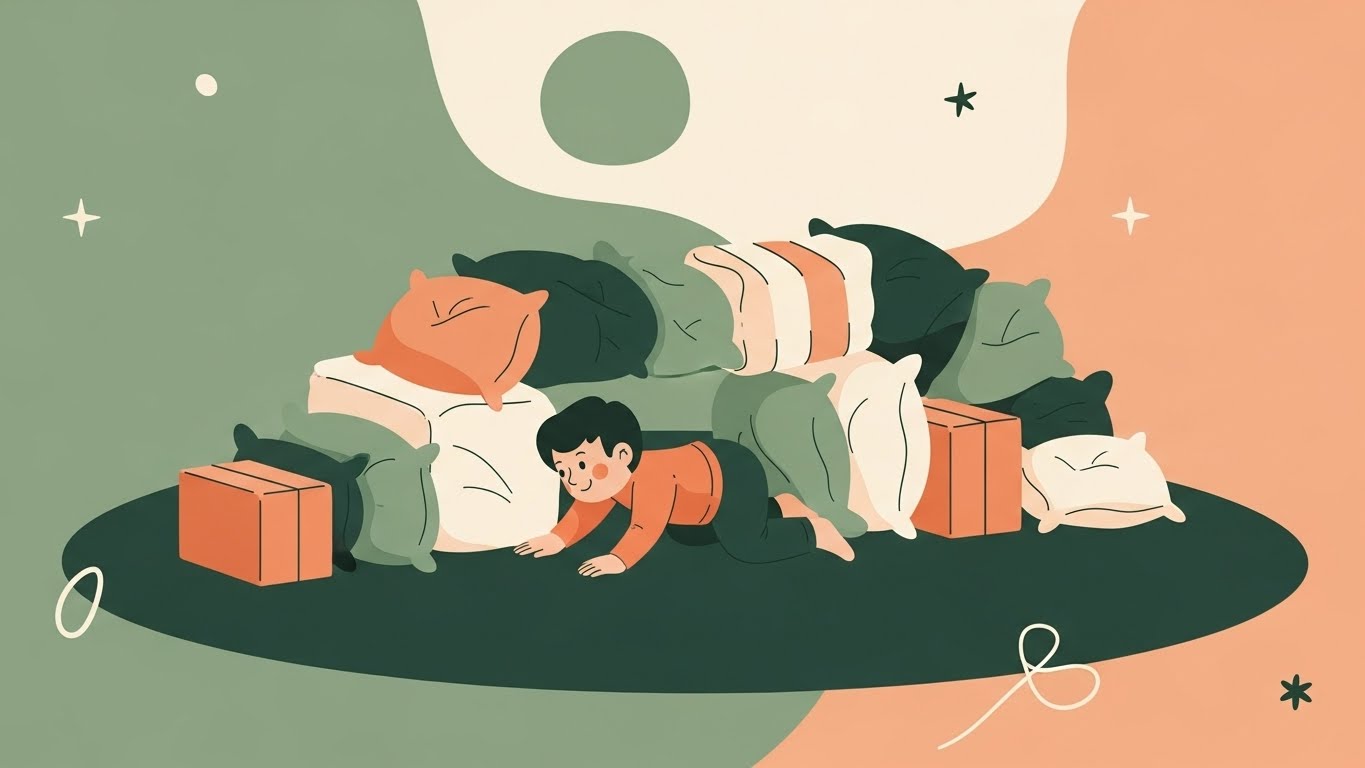
Gather items from around the house to create quick invitations to play. Fill a bin with rice, lentils or dried beans and add scoops and containers for pouring. Make a basket of scarves for dancing and peek‑a‑boo. Tape lines on the floor for a mini obstacle course. Offer cardboard boxes to stack, crawl through or transform into cars. For toddlers, stick painter’s tape to the table and encourage peeling and sticking. These short activities build fine‑motor skills, coordination and problem‑solving without elaborate materials.
Music and movement breaks
Movement is essential for physical development and regulation. Turn on favourite songs and dance together. Play freeze dance to practise stopping and starting. Try action songs like “Head, Shoulders, Knees and Toes” or “If You’re Happy and You Know It.” Make your own instruments from pots, pans and spoons. These bursts of activity break up quiet play and help children reset their focus.
Open‑ended toys versus single‑purpose toys
Open‑ended materials—blocks, fabric scraps, animals, vehicles, loose parts—can be used in endless ways, encouraging creativity and problem solving. Single‑purpose toys that light up or play music often entertain children briefly but offer limited opportunities for deep engagement. Balance your toy selection toward items that let your child direct the play. Join their games as a co‑player when invited and follow their lead.
Creating a learning‑rich environment
Rotate materials regularly to maintain interest. Display toys and books at eye level on low shelves. Provide a variety of textures and sizes. Use language to label objects and actions (“You’re stirring the beans”); ask open questions that invite explanation (“How did you build that tower so tall?”). Encourage pretend play with props like pots, stuffed animals or cloths. Play fosters cognitive, social and emotional growth.
At NINI, we design indoor environments that invite exploration. Our teachers rotate materials weekly and model playful interactions. Come see our play‑based curriculum by booking a tour or joining our interest list.
References: NHS Start for Life play ideas for toddlers; Harvard Center on the Developing Child – Serve and Return; DREME Family Math activities emphasising everyday conversations[9].
Toileting and self-care readiness