
Early talkers: building language and conversation
Language blooms in the first five years. Parents and caregivers are children’s first teachers, and everyday interactions shape speech and understanding. Knowing typical ranges helps you celebrate progress and seek support when needed.
Typical ranges for words and sentences
Many babies say a few meaningful words around their first birthday. Between ages one and two, vocabulary grows rapidly and children begin to combine two words. By age three, sentences get longer and grammar becomes more complex. Preschoolers ask questions and tell stories with a beginning, middle and end. Remember that children vary widely. Gestures, babbling and understanding often come before spoken words. Consult your pediatrician if your child does not babble by 12 months, has fewer than 10 words by 18 months or does not combine two words by age two.
Back‑and‑forth interaction (serve and return)
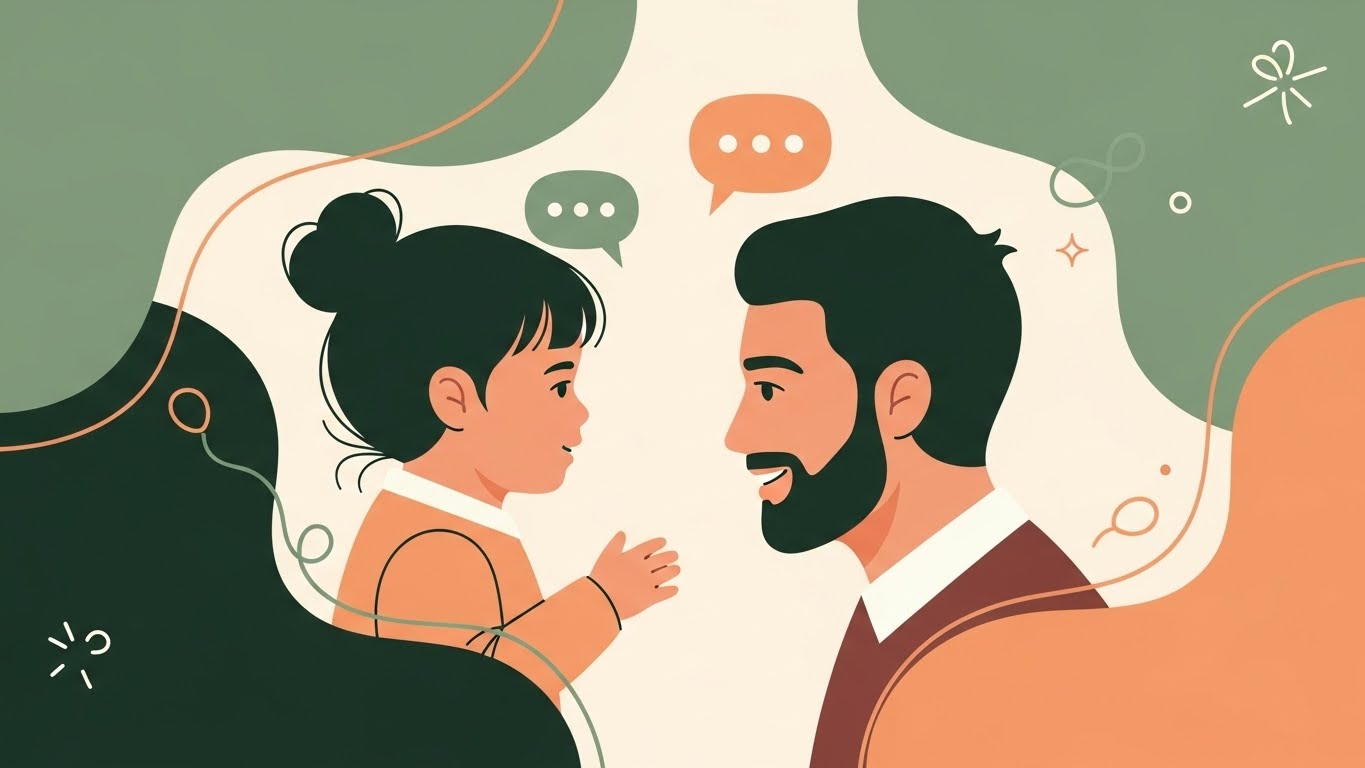
Researchers at the Harvard Center on the Developing Child describe “serve and return” as the foundation of brain development[4]. When a baby coos, points or looks at something (“serve”), respond with eye contact, words or an action (“return”). This back‑and‑forth builds neural connections and supports language and cognitive growth. Studies show that more conversational turns are associated with increased brain activation and better language skills[4]. Sensitive, responsive care predicts stronger cognitive and social competence[4].
Everyday opportunities to talk
Narrate your daily routines: “I’m stirring the oatmeal. Now I’m pouring the milk.” Label objects and actions. Imitate your child’s sounds and expand on them (“Dog!” – “Yes, a big brown dog is walking”). Sing songs, say nursery rhymes and play finger games. Encourage children to make choices by pointing or saying words. For preschoolers, ask open questions (“What do you think will happen next in the story?”), offer wait time for responses and avoid correcting mistakes harshly. Conversational back‑and‑forth is more important than drilling vocabulary.
Reading and storytelling
Make books a daily part of your routine. Point to pictures, describe characters and invite your child to turn pages. For toddlers, choose sturdy board books with clear images and repeat favourite stories; repetition builds memory. For preschoolers, explore picture books with rich language and discuss the plot. Encourage them to retell stories or invent their own. Visit the library and let your child pick books that interest them. Shared reading strengthens parent‑child bonds and fosters a lifelong love of learning.
When to seek support
If your child shows limited eye contact, rarely imitates sounds, doesn’t respond to their name, loses previously acquired words or seems disinterested in communication, talk with a pediatrician or speech‑language pathologist. Early intervention services provide assessment and support. Multilingual children may mix languages; look at progress across all languages and ensure there is ample exposure.
At NINI, our educators use descriptive language throughout the day and tailor interactions to each child’s level. We collaborate with specialists when children need extra support. To learn more about our language‑rich environment, book a tour or join our interest list.
References: CDC – Developmental milestone checklists; Harvard Center on the Developing Child – Serve and Return[4]; NHS Start for Life guidance on first words and developing sentences.

Calm spaces for little feelings: creating a cozy corner